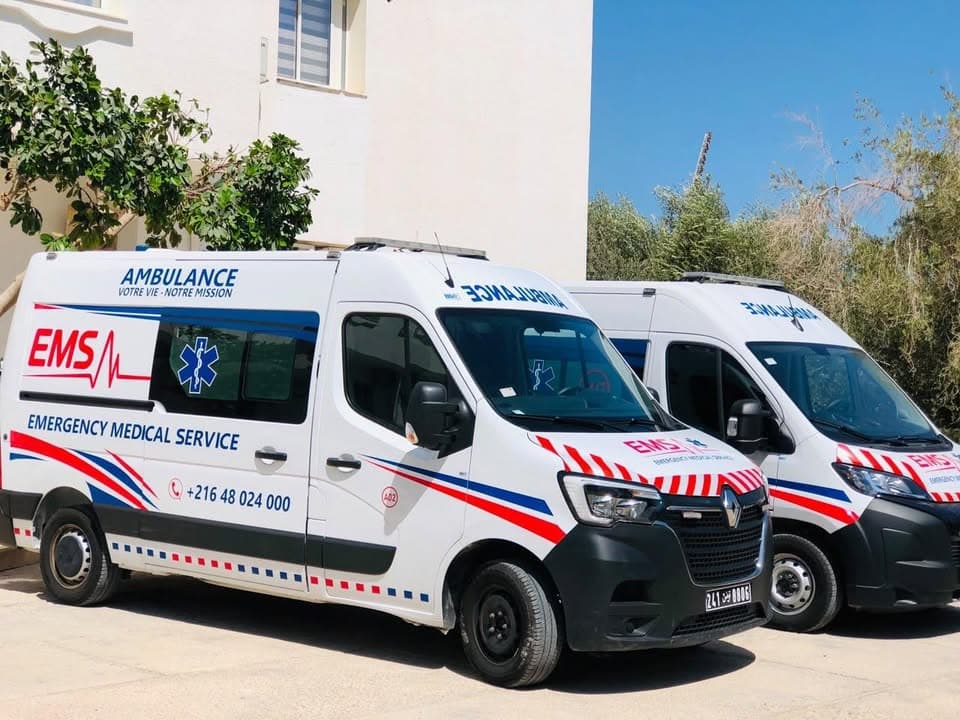
When is a medicalised transport considered?
The need is usually identified by a doctor, a hospital ward or a clinic: a condition requiring monitoring during the journey, a patient connected to a medical device, a transfer after a procedure, or a long journey where lying flat is unavoidable. EMS makes no diagnosis and does not decide the level of medical support on your behalf. We work from what the healthcare professional has specified and arrange the transport accordingly.
What we settle before confirming
We go back over the pick-up point and the destination, the timing, the expected duration, whether a stretcher or a chair is required, whether someone travels with the patient, and the access conditions at both ends. These determine the make-up of the crew and the equipment on board. They are settled before departure, never improvised on the doorstep.
Preparing for the day itself
The crew arrives at the agreed address at the agreed time. Make sure the contact person is there, that any documents the receiving facility asks for are ready, and that the route to the room or the entrance is clear. If the patient's condition changes between booking and departure, tell EMS straight away: the arrangements may need revising, and it is far better to know before the crew arrives.
Passing on medical information
Clinical instructions, reports and prescriptions go directly to the crew concerned or to the receiving facility. The quote form on this site must contain nothing of that kind: it exists only to open a conversation. Keeping the two separate protects your health information and stops it travelling through channels that were never designed to carry it.
Arranging the transport with EMS
Call or message on WhatsApp with both addresses and the date. We tell you what is possible and on what terms, and send you a quote for that journey. The booking becomes firm once both sides have confirmed.