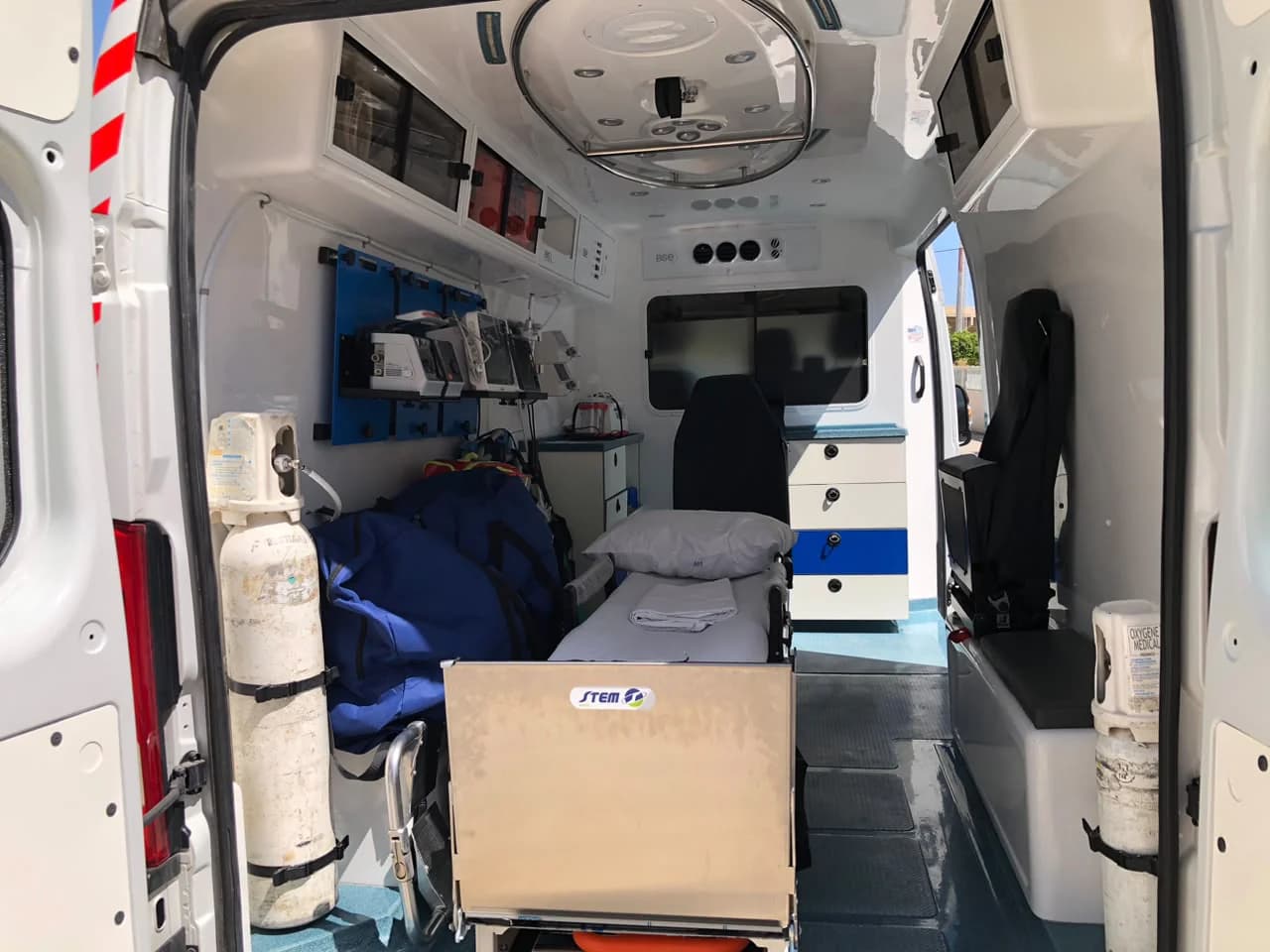
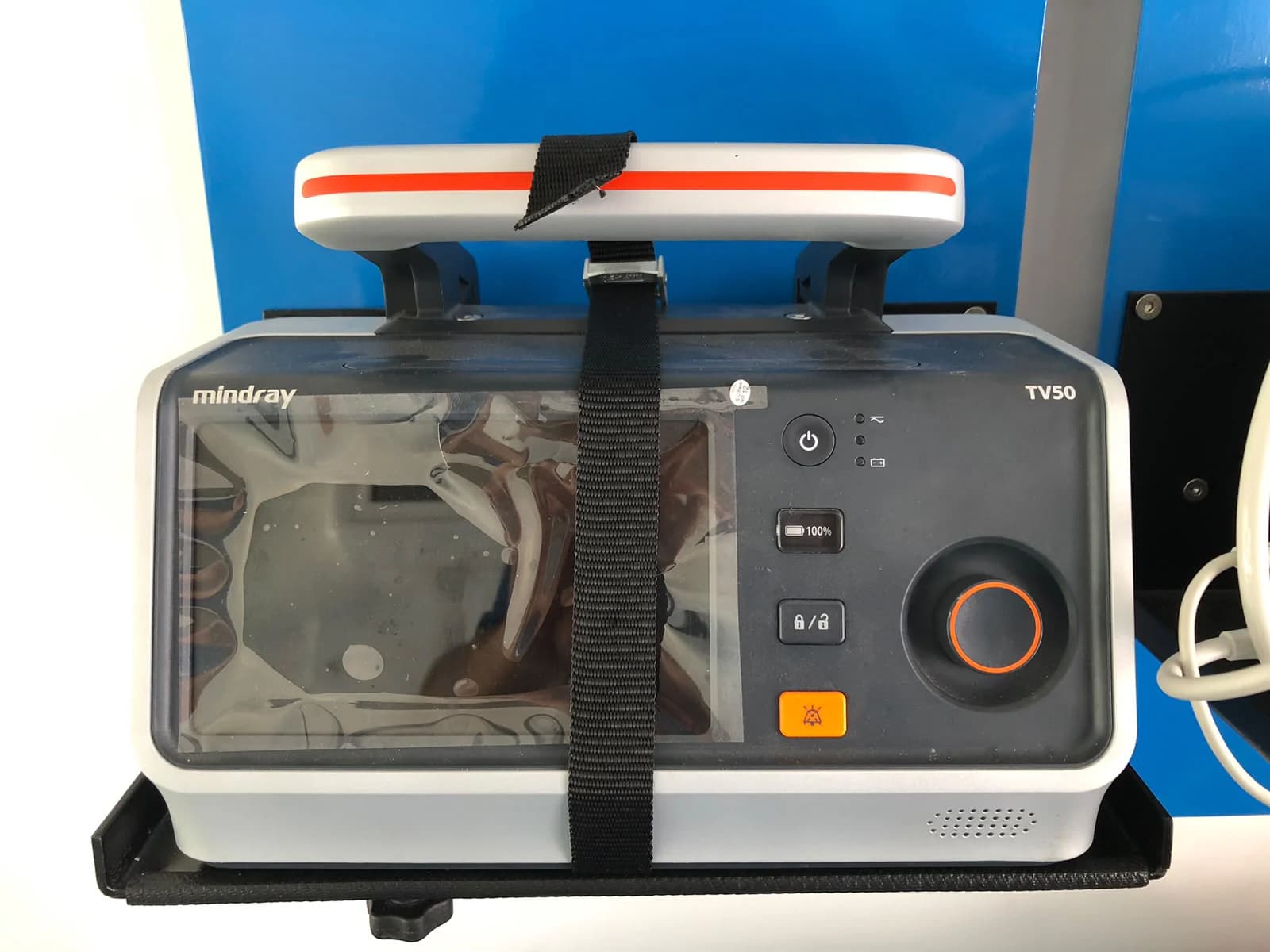
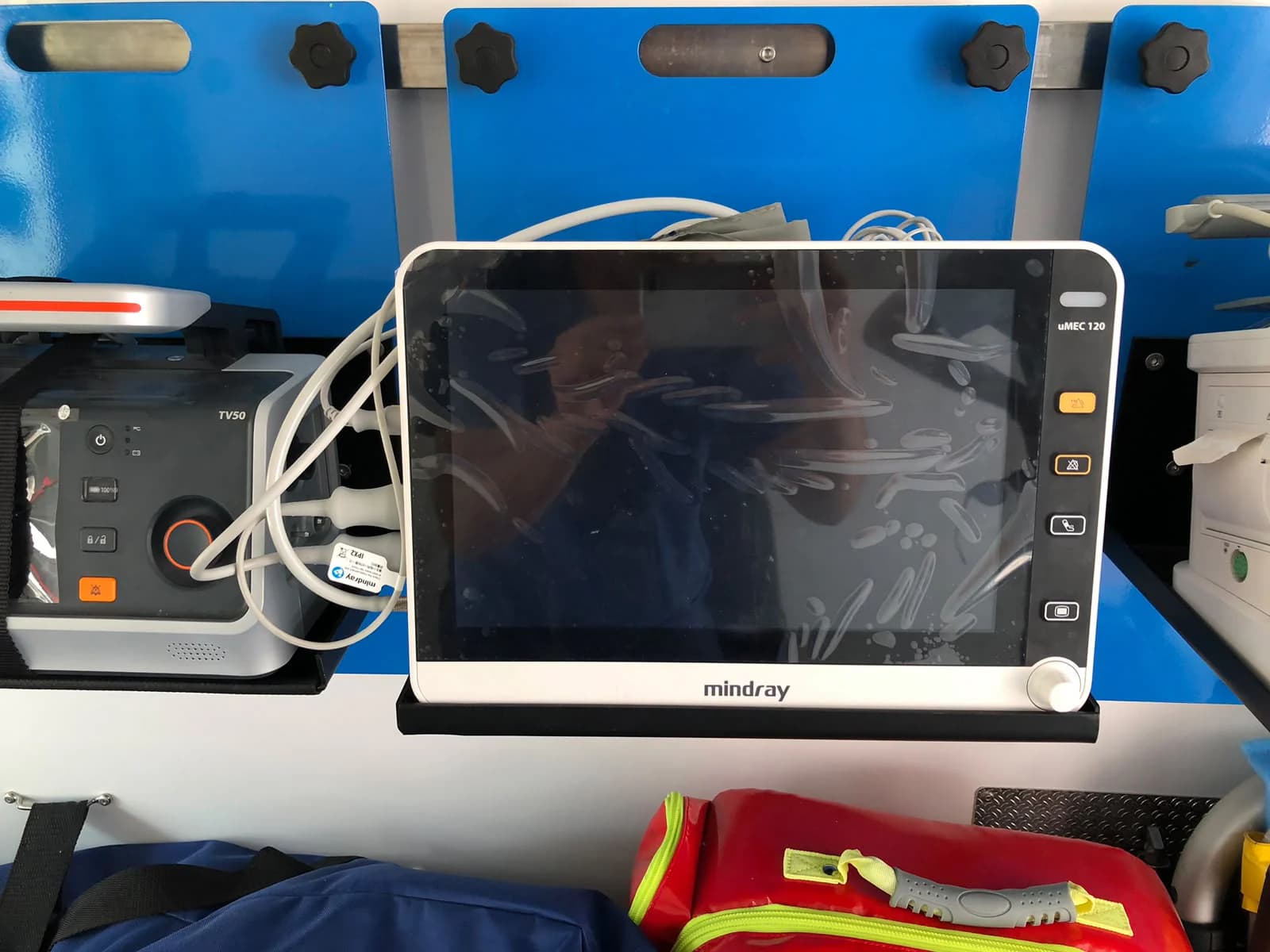
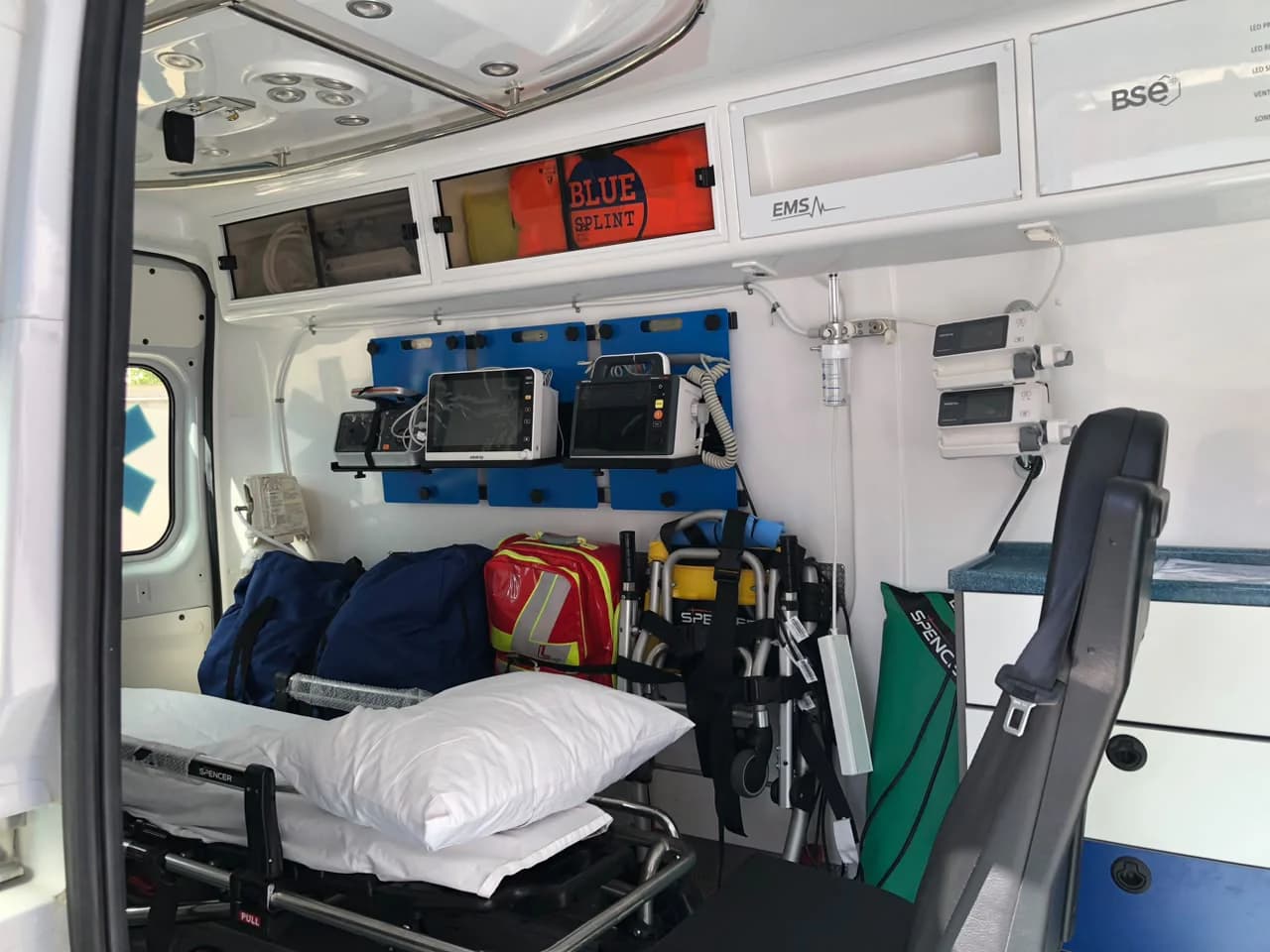
EMS Ambulance arranges medical transport for patients who need oxygen therapy during their journey, to or from a home, a clinic, a hospital or an airport. Every request is assessed to define the means suited to the patient's condition, the length of the journey, the prescribed flow rate and the level of monitoring required.
Transport carried out by the EMS team or arranged with a partner, depending on your needs and availability.
01
When to arrange a transport on oxygen
A patient may need oxygen during medical transport in many situations:
returning home after a hospital stay;
admission to a clinic or hospital;
transfer between two care facilities;
a planned consultation or test;
a journey to a specialist centre;
long-distance medical transport;
an airport connection or ground medical repatriation;
transport of a patient already on home oxygen therapy.
The presence of oxygen does not automatically mean a fully medicalised ambulance is required. The arrangement is defined by the patient's stability, the medical prescription, ongoing treatments and the conditions expected during the journey.
02
An arrangement suited to the patient's condition
Before confirming the transport, EMS gathers the information needed to prepare the journey safely. It is important to tell us:
the prescribed oxygen flow rate;
the device used, nasal cannula or mask;
the expected duration of the journey;
the patient's usual mobility and the transport position required;
any medical devices in use;
the need for monitoring during the journey;
the pick-up point, the destination and their access conditions;
the details of the person or team receiving the patient.
For a transfer between two facilities, these needs are settled with the medical team of the discharging ward.
03
Patient transport or medicalised ambulance
The type of transport depends on the clinical situation. A stable patient on long-term oxygen therapy can often travel as a planned patient transport, with an oxygen reserve matched to the length of the journey. A medicalised ambulance becomes necessary when the patient is at risk of deteriorating, or when closer monitoring, additional equipment or a specific professional escort is requested. The aim is to deploy what is genuinely needed, neither underestimating the patient's needs nor committing a disproportionate set-up.
04
Preparing the oxygen before departure
The oxygen available must cover:
settling the patient in;
the estimated length of the journey;
any waiting;
the handover on arrival;
an appropriate safety margin.
Autonomy depends on the cylinder's capacity, its pressure and the prescribed flow rate. This check is carried out before departure by a competent person. The family or the escort must never adjust the prescribed flow rate on their own.
05
Equipment safety during the journey
Oxygen cylinders are secured and fastened inside the vehicle. During the journey:
no cigarette or naked flame may be present;
oxygen is kept away from heat sources and sparks;
connections are checked;
equipment is not moved without care;
the delivery device stays correctly positioned.
These measures protect the patient, the people travelling with them and the transport crew.
06
Transfer between two clinics or hospitals
For an inter-hospital transfer on oxygen, the discharging facility passes the useful information to the transport crew. Before departure, the following should be confirmed:
the patient's acceptance by the receiving facility;
the receiving ward and its contact;
the oxygen flow rate;
ongoing treatments or devices;
any position restrictions;
the medical documents travelling with the patient;
the expected handover time.
On arrival, the patient is handed over to the staff of the designated ward with the information and documents needed for continuity of care.
07
Returning home on oxygen
Before the return, the family checks that an oxygen source will be available as soon as the patient arrives. It is advisable to prepare:
the concentrator or the prescribed cylinders;
the nasal cannula or mask;
the patient's bed or chair;
medication, prescriptions and discharge papers;
any planned nursing care;
someone present to receive the patient.
Tell EMS as well about the floor, whether there is a lift, the number of steps and any access difficulties.
08
Long-distance transport on oxygen
A journey between two regions calls for reinforced preparation: oxygen autonomy, how long the crew is committed, any breaks and the conditions on arrival are all planned ahead. EMS arranges these transports to and from every region of Tunisia, depending on the patient's needs and on availability.
09
How to request a transport on oxygen
When you call, have the following ready:
City and exact pick-up address.
Destination facility or address.
Preferred date and time.
Prescribed oxygen flow rate and type of device.
Patient seated, in a wheelchair or on a stretcher.
Floor and whether there is a lift.
Estimated length of the journey.
Name and phone number of the contact on arrival.
Any involvement of an insurer or assistance company.
A quote is drawn up from the journey, the means required, the time committed and the access conditions. The service is available 24/7, subject to confirmation of the journey, the means required and crew availability.
Frequently asked questions about this transport
Can a patient travel with their own oxygen concentrator?+
It depends on the device, its autonomy, its conditions of use and how the transport is set up. These points are checked with EMS before the journey is confirmed.
How much oxygen should be planned for?+
The reserve depends on the prescribed flow rate, the length of the journey and any possible waiting, plus a safety margin. The check is carried out by a competent person before departure.
Does a doctor have to travel with the patient?+
Not systematically. The level of escort depends on the clinical condition, the need for monitoring and the instructions of the discharging medical team.
Can EMS carry out a long-distance transport on oxygen?+
Yes, subject to a prior assessment of the needs, the oxygen autonomy, the length of the journey and crew availability.
Can an insurer cover the transport?+
Cover depends on the policy and on the insurer's agreement. It is advisable to obtain an authorisation or a payment guarantee before the transport whenever the situation allows.
What if the patient's condition worsens before departure?+
Severe breathing difficulty, cyanosis, altered consciousness or any acute deterioration requires urgent assessment. Call the public emergency services immediately without waiting for a reply by form or WhatsApp.
Need to arrange an ambulance?
Tell us about your journey. EMS helps you arrange the transport.