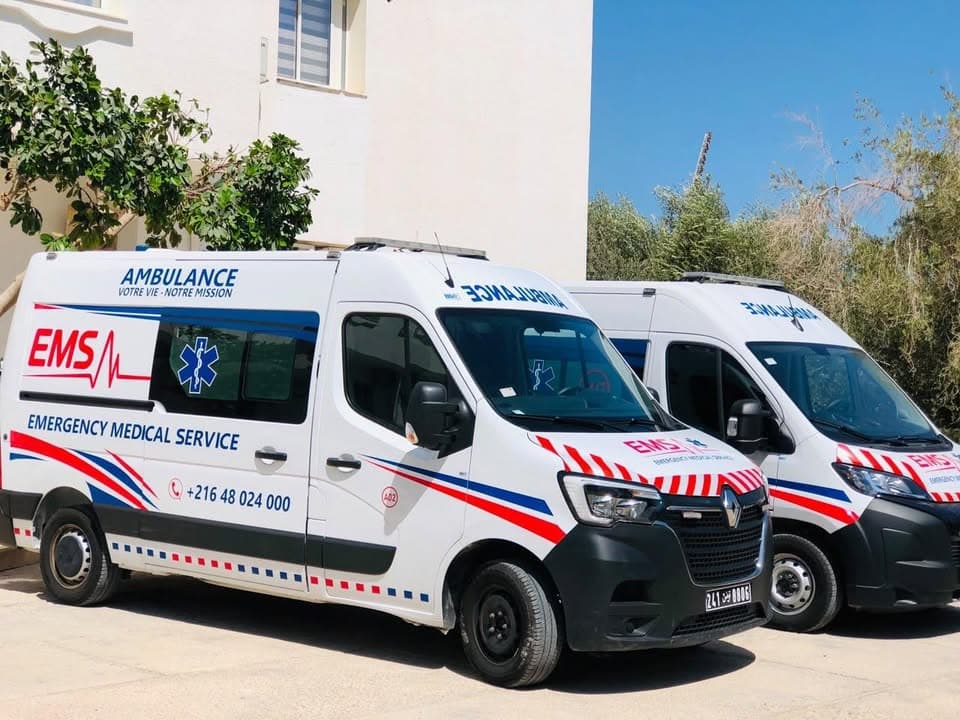
Journeys built around the appointment time
A care-related journey is planned backwards: you start from the time the patient must have arrived, then work back to set the departure. Give us the exact time of the consultation or the test rather than a preferred pick-up time. Specify the department and the entrance to use as well, because in large facilities access differs from one building to the next.
One way or return
If the patient needs bringing back afterwards, say so on the first call rather than later. A return journey is prepared differently: its duration is rarely known in advance, and the waiting has to be built into the arrangements. For regular sessions, tell us too — a repeating pattern is far easier to organise than a series of separate requests.
Access conditions at both ends
The floor, whether there is a lift and how big it is, the width of the corridors, steps at the entrance and whether a vehicle can park nearby all change how the transport actually unfolds. These sound like minor details on the phone, but they are what makes the difference on the day. Describe them honestly, even if they sound awkward: that is precisely what we need to know.
Mobility and accompaniment
Tell us whether the person walks unaided, needs help, uses a wheelchair, or requires a stretcher. Say as well whether a relative travels with them. These determine the type of vehicle and the crew, and they are settled before the transport is confirmed.
Requesting patient transport
Contact EMS by phone or WhatsApp with both addresses, the appointment time and whether a return is needed. We tell you what is available and send you a quote. The journey is booked only once we have explicitly confirmed it.