Home/Ground medical transport for assistance companies and insurers
EMS AMBULANCE · TUNISIA
Ground medical transport for assistance companies and insurers
When a case handler abroad organises a repatriation or a transfer in Tunisia, the ground legs have to fit the medical file, the flight plan and the payment guarantee all at once. Based in Monastir, EMS Ambulance carries out those road journeys anywhere in the country, working to your case file from the first call to the invoice. This page sets out, step by step, how we work with assistance companies and insurers: what to send us, what you receive and who to deal with.
EMS carries out the land part of a repatriation inside Tunisia, in both directions:
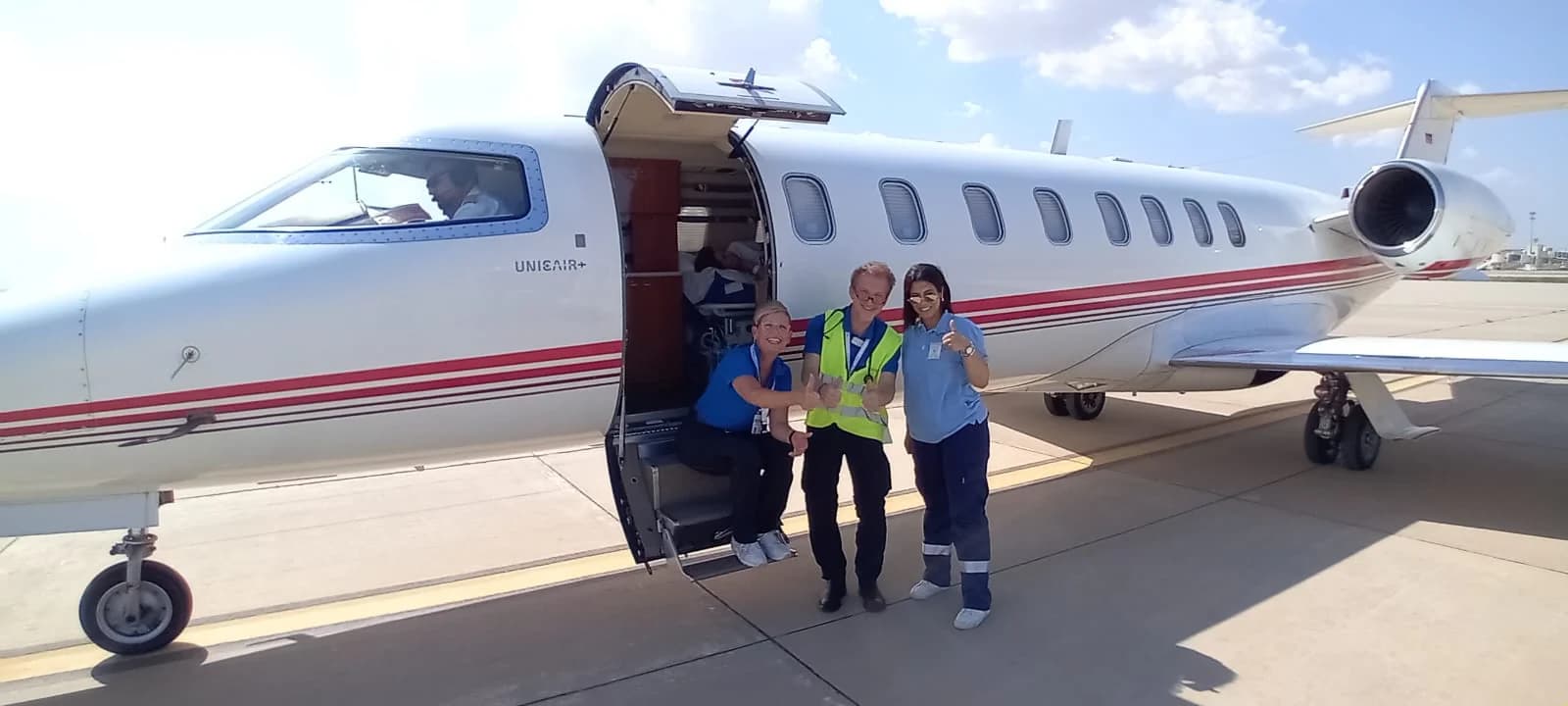
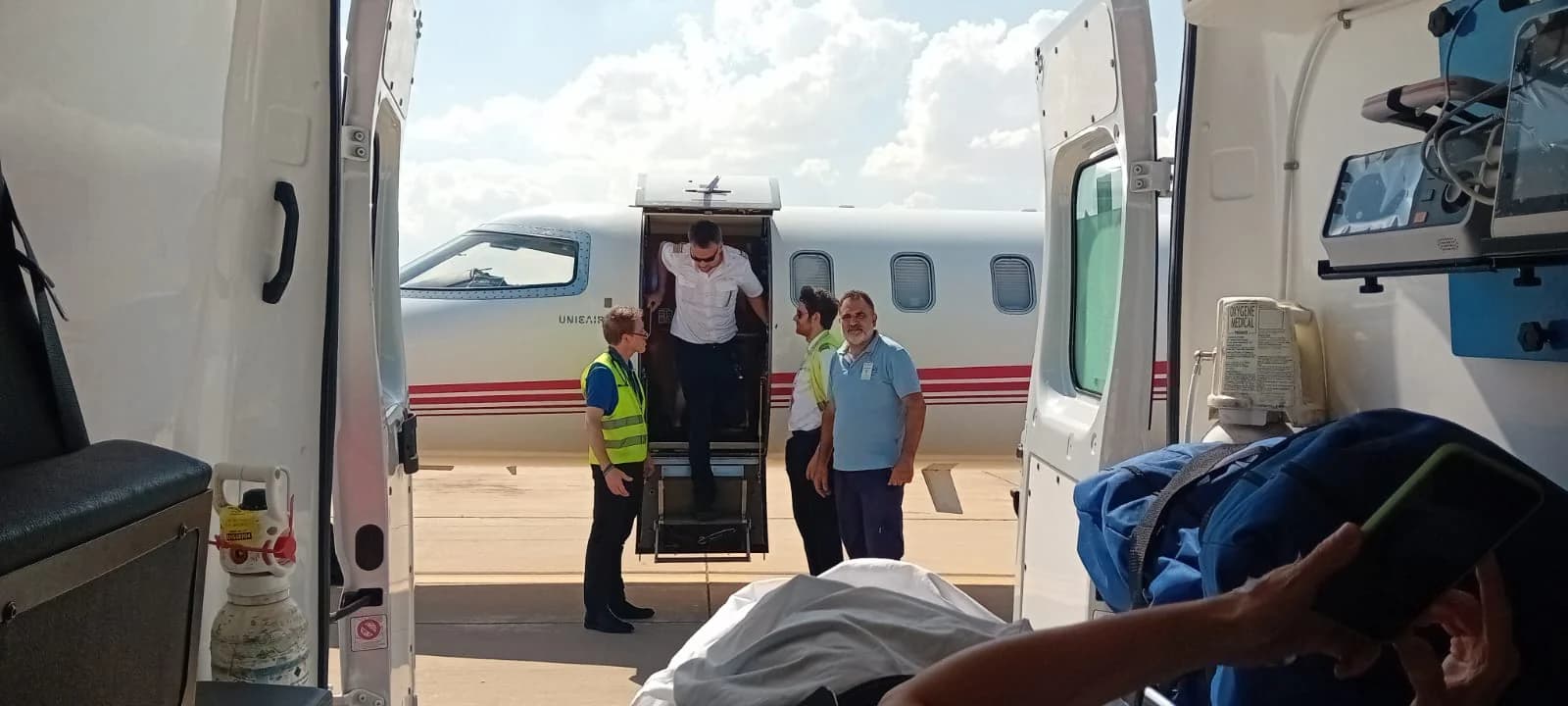
outbound, from the hospital bed or hotel room to the aircraft;
inbound, from the aircraft to the receiving hospital or to the patient's home.
Timings are built around the flight your team has booked and the instructions of your medical department. The flight itself and the medical escort on board remain with the assistance company or the airline: EMS hands the patient over, or takes charge of them, at the points set out in the case file.
For a guest leaving a hotel in Sousse, Hammamet or Djerba, tell us the hotel's exact name, the entrance to use and the floor of the room, whether a relative is travelling with the patient and how much luggage goes in the ambulance. Those details decide the vehicle and the departure time.
Airport links
We run ground transfers to and from Tunisia's international airports, in particular:
Monastir Habib Bourguiba International Airport, close to our base;
Enfidha-Hammamet International Airport;
Tunis-Carthage International Airport, roughly a two-hour drive from Monastir;
Djerba-Zarzis International Airport;
Sfax-Thyna International Airport.
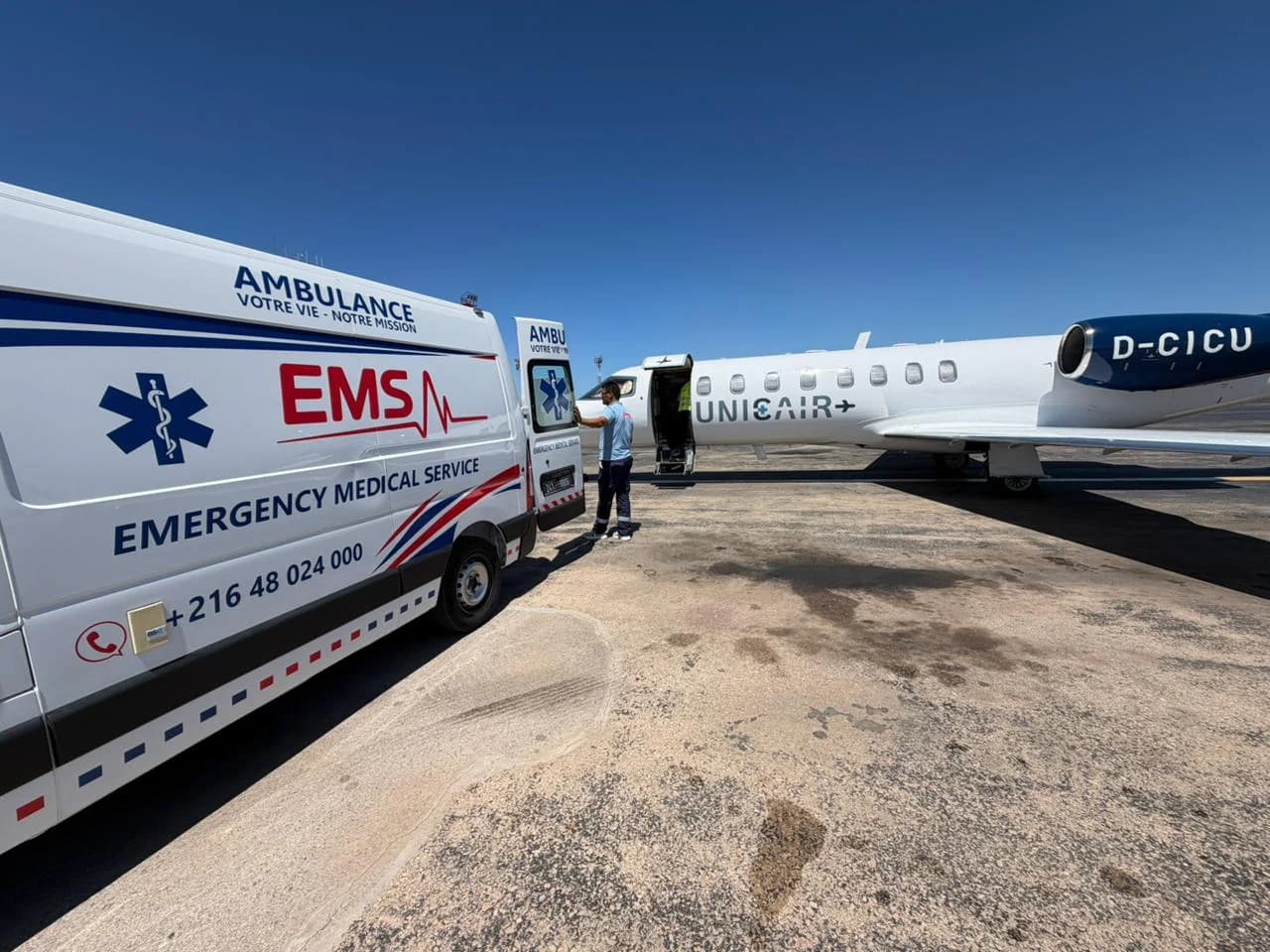
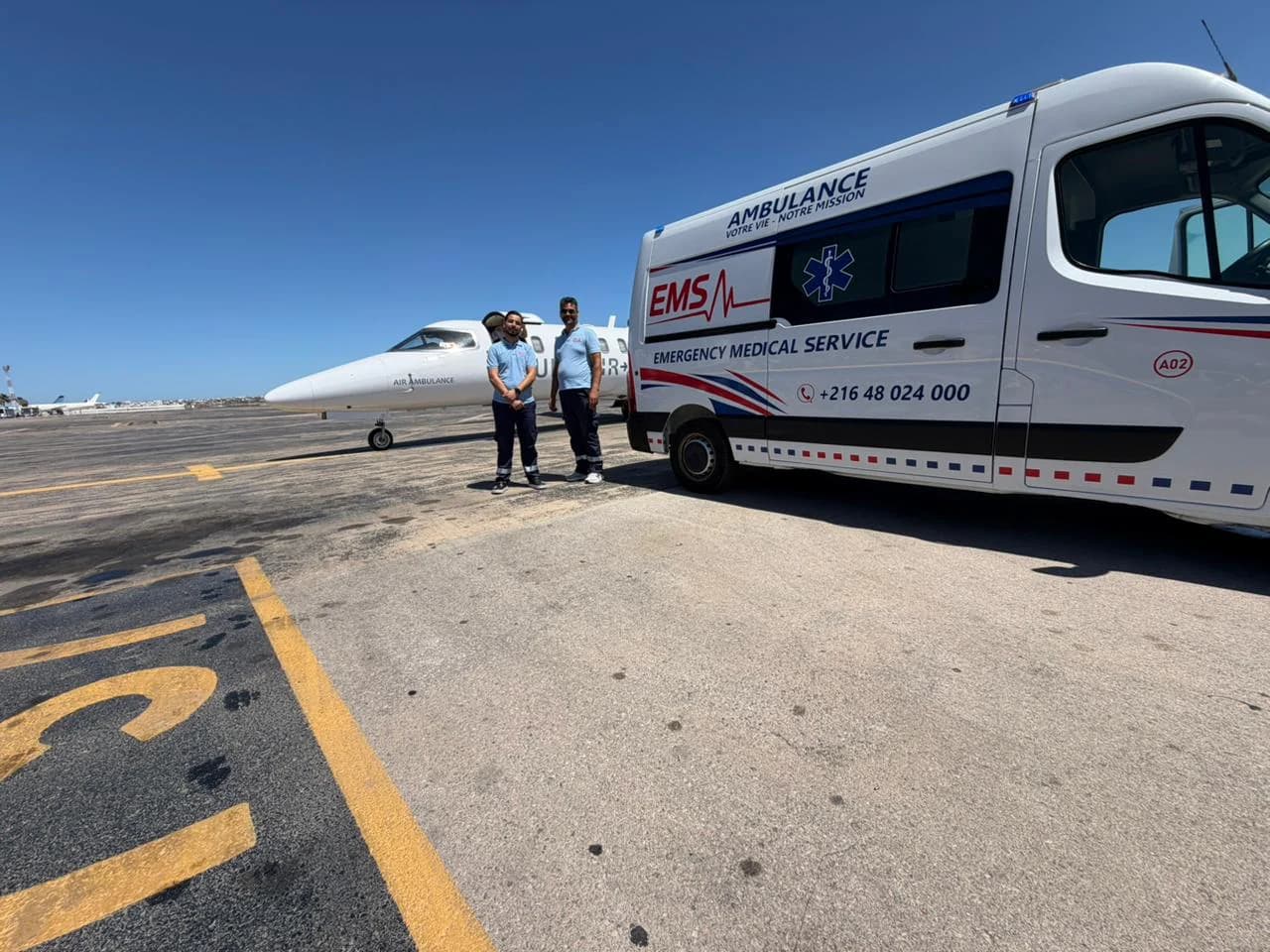
Whether the ambulance goes airside to the aircraft or hands over at the terminal depends on what the airport and the airline authorise for that flight. Send us the flight details and any airline instructions, and we confirm the handover point beforehand.
For a departure, we plan backwards from the check-in or boarding time the airline gives your team, not from the take-off time. For an arrival, we stay in touch with the case handler about any delay and set the pick-up by the actual landing.
Inter-hospital transfers
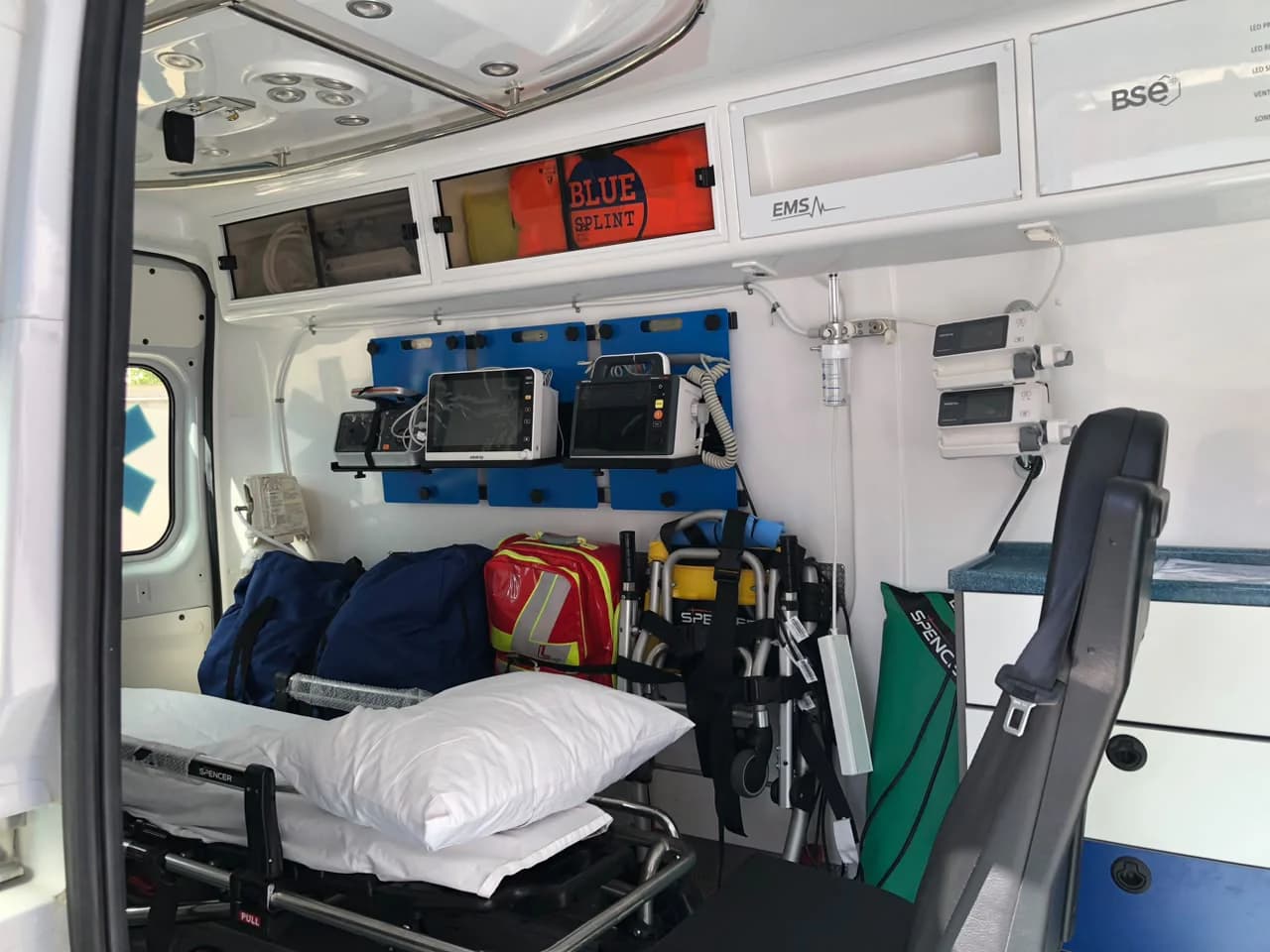
Before a repatriation, or instead of one, your medical team may want the patient moved: from a clinic in a resort town to a facility in Tunis or Sfax, or to a hospital closer to the departure airport. EMS coordinates with both wards, matches the vehicle and crew to the level of care your doctor specifies, and runs the journey as planned medicalised transport.
To set up the transfer, we need the names of both facilities and wards, a contact on each side and confirmation that the receiving ward is expecting the patient. Tell us about any oxygen, monitoring or IV needs: the quote states what the vehicle and crew will provide.
EMS is a private operator: for a life-threatening emergency, the public SAMU (190) remains the service to call.
Guarantee of payment (GOP)
No mission is confirmed on a verbal agreement. The sequence is simple:
you send the case details and we return a written quote to the case handler;
you issue a written GOP against that quote;
the mission is confirmed on receipt of the GOP.
To prepare the quote, we need the case reference, the treating physician's medical report and, for a flight, the fit-to-fly certificate where one has been issued. Medical documents go directly to the coordinator handling the file, never through the online form.
If the plan changes after the GOP has been issued, for instance a rebooked flight or a different receiving hospital, we send an updated quote and ask for an amended GOP before the new date.
Response time
A dedicated coordinator calls you back in under 10 minutes, 24/7, to take the request and check the essentials: route, date, level of care, flight if there is one. That is a call-back time, not an arrival time: the pick-up time is agreed with you once the file has been reviewed, and the written quote follows that review.
Requests made at night, at weekends or on public holidays follow the same process. Once the file is open, your team deals with the coordinator assigned to it rather than a general line, which saves repeating the case history on every call.
Mission report
After each transport, the case handler receives a mission report covering:
the pick-up and handover times;
the conditions of the transport: vehicle, crew, patient position, any stops;
the patient's condition as observed at pick-up and at handover.
It is an operational record of the journey for your file. It does not replace a medical report and contains no diagnosis.
The report is sent by email under your case reference, so that your medical team can file it with the rest of the case.
Invoicing in euros
Missions can be invoiced in euros (EUR). The invoice is addressed to the assistance company after the mission, in line with the accepted quote, and carries your case and GOP references so it can be matched without back-and-forth. Tell us at the quote stage which entity to invoice and any reference your accounts team requires.
Any change agreed with the case handler during the mission, such as a different destination, is confirmed in writing before it appears on the invoice.
Dedicated contact
Requests from assistance companies and insurers reach us at contact@emsambulance.tn, or by phone and WhatsApp on the numbers shown on this site. Your case handlers can work with us in French, English or Arabic.
The B2B form below collects what we need to open a file: company, case reference, country, route, date, level of care and contact person. Keep medical documents for the coordinator: the form is there to open the file, not to carry the medical history.
Questions from assistance companies
Can EMS start a mission before the GOP arrives?+
The mission is confirmed on receipt of your written GOP. The quote, scheduling and coordination with the facilities can be prepared in parallel, so that confirmation can follow as soon as the guarantee is in hand.
Does EMS arrange the flight or the medical escort on board?+
No. EMS covers the ground legs inside Tunisia. The flight, the in-flight medical escort and the airline's medical clearance remain with the assistance company or the airline; we align our timings with theirs.
Can the ambulance drive up to the aircraft?+
Only where the airport and the airline authorise it for that flight. Otherwise the handover takes place at the terminal, at the point agreed with the airline's ground staff. We tell you which option applies before the day.
Does the mission report include a medical assessment?+
No. It records times, transport conditions and the patient's condition as observed at pick-up and at handover. Medical assessment remains with the treating physician and your own medical team.
Can you handle a case in the south, far from Monastir?+
Yes. EMS works across all 24 governorates. For a patient in Djerba, Zarzis or Gabès, we look with you at whether the nearest airport, Djerba-Zarzis or Sfax-Thyna, or a transfer towards Tunis-Carthage better fits the flight plan, and the indicative road time is set out in the quote.
Need to arrange an ambulance?
Tell us about your journey. EMS helps you arrange the transport.