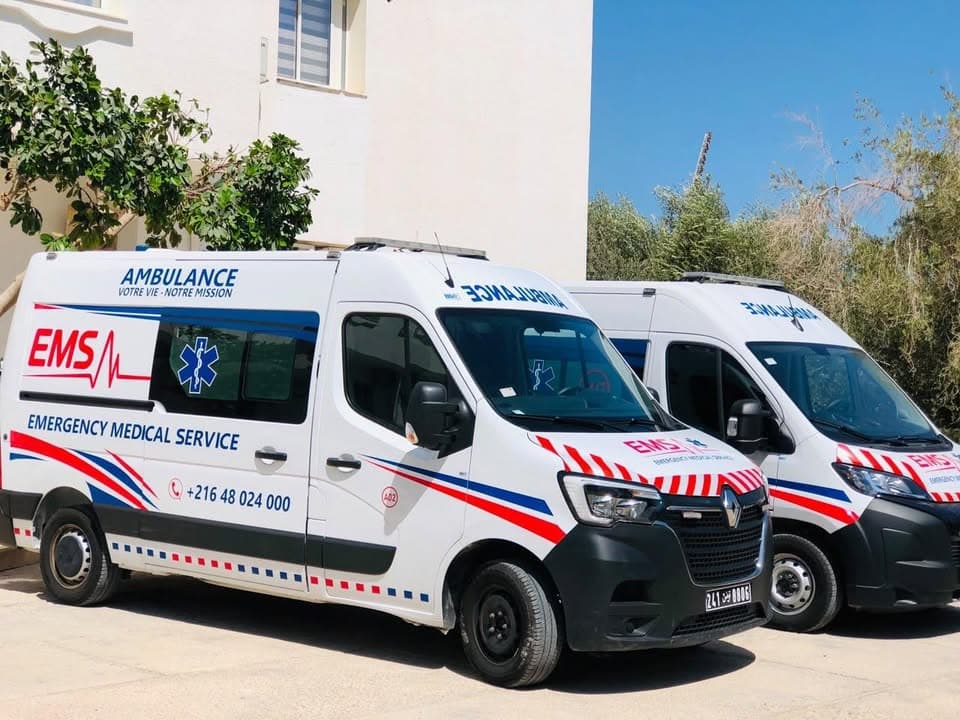
Coordinating discharge and admission
A transfer cannot be set up from a single address. We need the discharging ward, the receiving facility and ward, and someone reachable at each end. The departure time depends as much on the receiving ward as on the availability of transport: a bed freed late in the afternoon calls for entirely different timing than an admission booked for the morning. We work around both constraints.
What we need to know about the patient
We need to know whether the patient travels lying down or seated, whether they are connected to a medical device, whether support is required during the journey, and whether a member of staff travels with them. This information comes from the discharging ward and determines the vehicle, the crew and how the transfer is run.
What is exchanged away from this site
Reports, prescriptions, imaging and monitoring instructions move directly between facilities or with the crew carrying out the transport. They must never pass through the quote form on this site, which exists only to open a conversation and is not a channel for health data.
Planned transfers and same-day requests
A transfer planned several days ahead allows the timing and the crew to be arranged properly. A request made on the day depends on what is available at that moment: we tell you honestly what can be done rather than committing to a deadline we could not hold. For a life-threatening emergency, the public emergency services are the ones to call.
Arranging a transfer with EMS
Facilities can contact EMS directly by phone. Give us both wards, the useful contacts, the target timing and the patient's needs. We confirm the arrangements with both ends before departure.