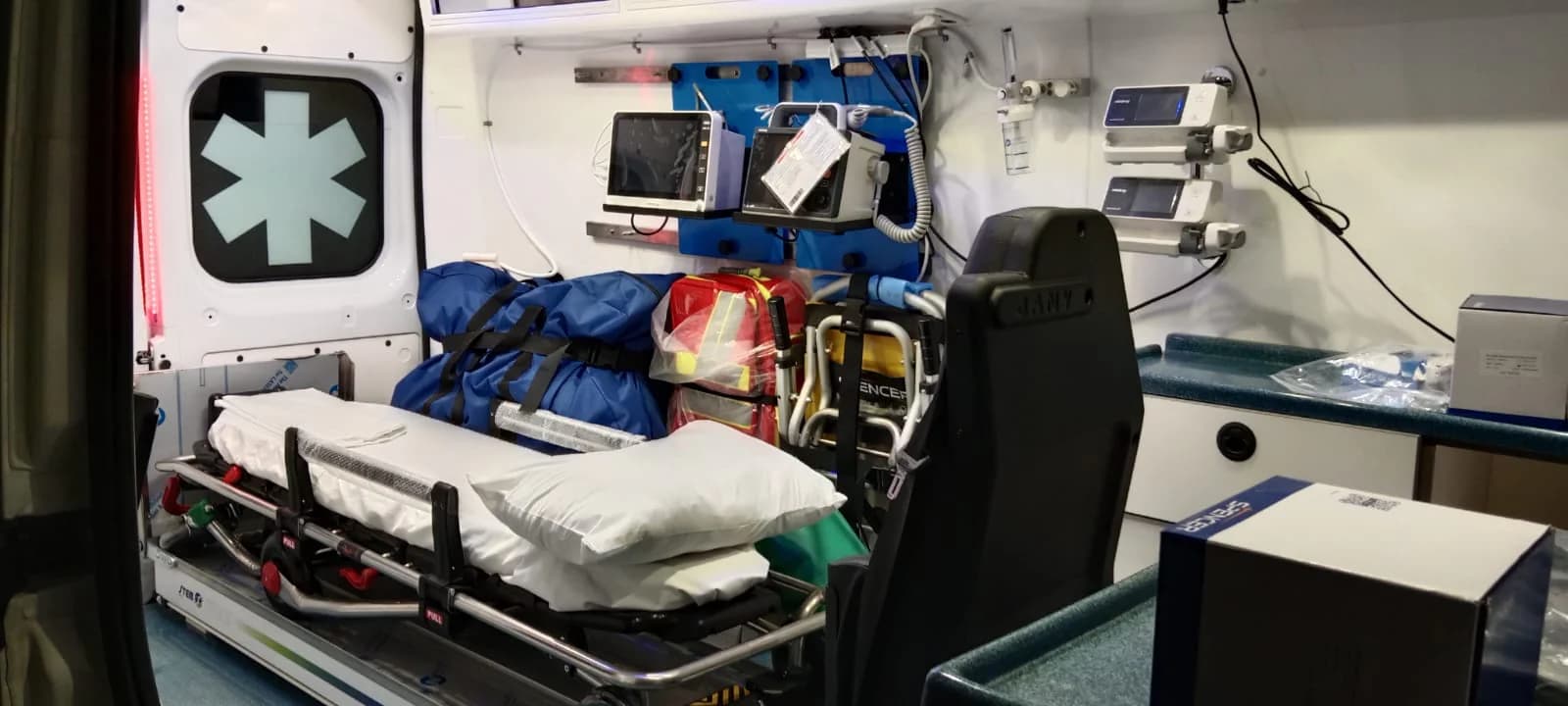
Hospital discharge: preparing the ambulance journey home
The doctor says discharge is possible. Families may think the hardest part is over, but discharge dates are often confirmed late and transport slots fill quickly. Planning the return avoids waiting, improvised journeys and unexpected access problems at home. Here is how EMS Ambulance can help.
Do not wait for a confirmed date. Even a provisional date is enough to contact EMS. Adjusting a planned time is easier than arranging transport on discharge morning.
Late morning and early afternoon are often busy discharge periods, which can reduce availability. Early notice allows alternative times to be considered, without guaranteeing a booking before confirmation.
Describe access to the home
Arrival requires as much planning as departure. Provide:
Apartment floor.
Whether there is a lift and its dimensions.
Number of steps.
Width of doors and corridors.
Nearby parking possibilities.
A floor without a lift must be mentioned before departure so the crew can assess carrying equipment and staffing.
Arrange someone to receive the patient
Ideally, someone should be at home with the keys and a bed or chair ready. Clear the route, especially if equipment has been delivered. Provide a phone number for the crew. If the patient will return alone, mention this when requesting transport so handover conditions can be assessed.
What the crew needs to know about the patient
The sending ward provides information determining vehicle and crew: lying or seated transport, medical devices, an accompanying person or healthcare professional. Discharge reports, prescriptions, imaging and monitoring instructions are exchanged directly between the hospital and transport team. Do not send them through a quote form or WhatsApp.
After discharge: care and follow-up
Home care, treatment sessions and follow-up consultations may require separate journeys. If regular transport is expected, share the schedule at discharge to arrange future slots. Mention a round trip in the first request.
Arrange the return in four steps
Call EMS on +216 48 024 000 or use WhatsApp with the hospital, home address and provisional date. A coordinator calls back within 10 minutes and provides a quote before confirmation.
Describe the home: floor, lift, steps and access. EMS assesses required equipment and crew.
Arrange someone to receive the patient and provide their contact. Prepare the bed and clear the route.
Wait for the hospital to approve discharge clinically and administratively. EMS then confirms timing subject to availability and quote acceptance.
This guide concerns planned transport. For a life-threatening emergency call SAMU on 190 first: EMS does not replace public emergency services.
In a life-threatening emergency or an acute deterioration, contact the competent public emergency services immediately. A request sent by form or WhatsApp does not confirm a transport booking.
Frequently asked questions
When should I contact EMS about hospital discharge?+
As soon as discharge is discussed, even if the date is provisional.
Why are late morning slots harder to obtain?+
Many discharges occur in late morning or early afternoon, reducing available slots.
What home details should I provide?+
Floor, lift dimensions, steps, door and corridor width and parking.
My home has no lift: is that a problem?+
Mention it before departure so the crew can assess feasibility and suitable carrying equipment.
Must someone be present on arrival?+
Someone with keys and a ready bed is recommended. Tell EMS if the patient will be alone.
Who decides the vehicle and crew?+
Clinical information from the sending ward determines the vehicle and escort needs.
Can I send discharge reports through the form?+
No. Medical documents are exchanged directly between the responsible professionals.
How do I book the return?+
Contact EMS with addresses and provisional date. Timing is confirmed after discharge approval, availability and quote acceptance.