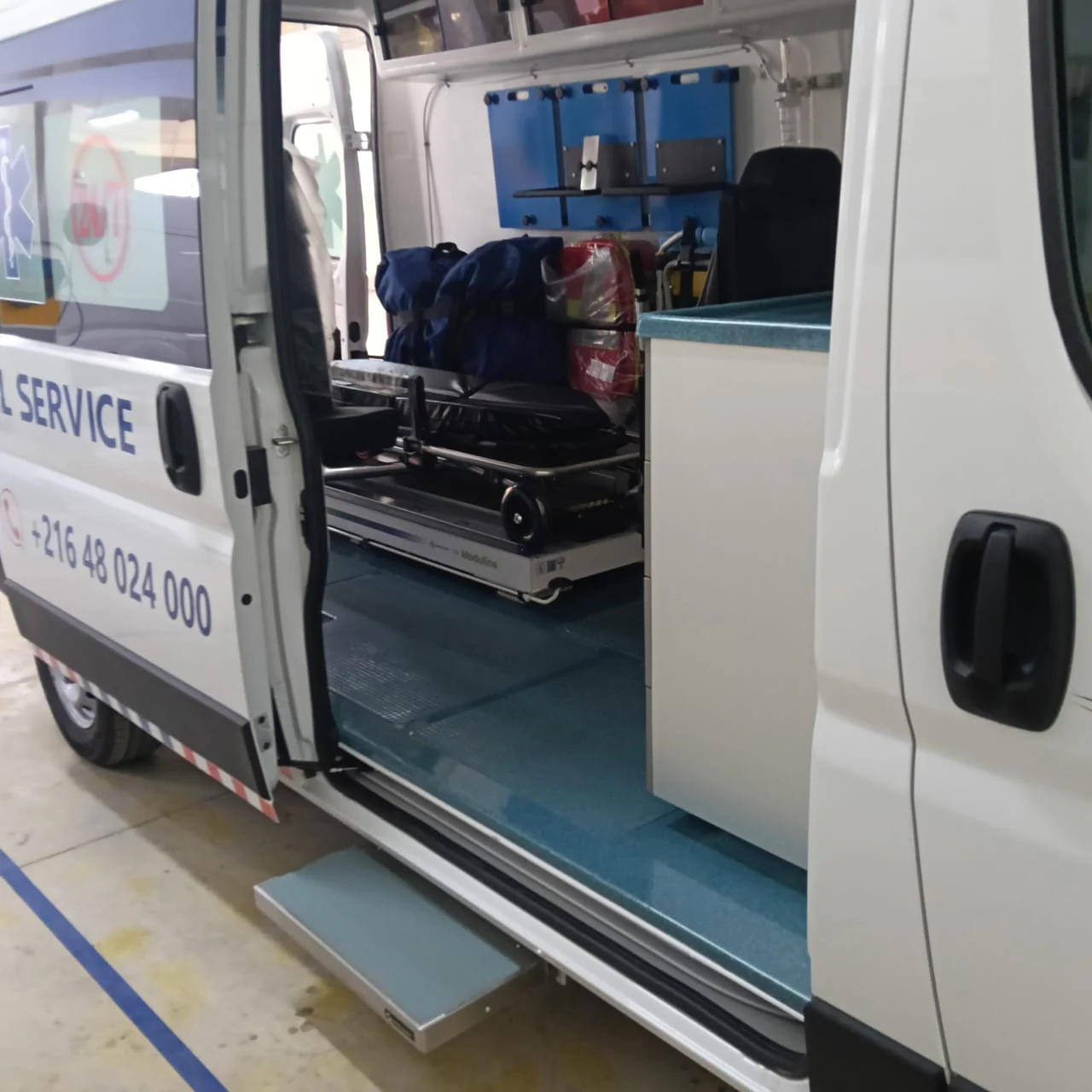
Patient upstairs without a lift: preparing ambulance transport
Home access details may seem minor on the phone, but they can determine how transport works. A third-floor flat without a lift, entrance steps, a narrow corridor or a street without parking can change the journey. Here is what to describe to EMS Ambulance before departure, and why.
Describe these conditions accurately, even if they seem difficult. Advance notice allows access to be assessed and planned; discovering obstacles on arrival complicates transport.
No lift: mention it before departure
A flat upstairs without a lift must be identified before departure. This is especially important for returning home after hospitalisation: arrival needs as much preparation as departure (see hospital discharge and return home). Report steps, door and corridor widths, and lift dimensions where applicable.
Patient mobility matters as much as the stairs
Say whether the patient walks independently, needs assistance, uses a wheelchair or requires a stretcher. Mention any accompanying relative. These details determine the vehicle and crew before transport is confirmed. Mobility is essential to assigning suitable transport.
Someone should receive the patient
A person should be at home with the keys and a ready bed or chair. Clear the route, especially if equipment has been delivered. Provide their phone number so the crew can contact them before arrival.
Parking
Nearby parking is part of the access information. A narrow street or difficult building entrance may not be apparent from the sending hospital, so mention it in advance.
Round trips and recurring journeys
If the patient needs a return journey after an appointment, mention it in the first request: waiting time and the return need separate planning. For recurring sessions, provide the schedule to organise transport consistently.
How to request transport
Contact EMS by phone on +216 48 024 000 or WhatsApp with both addresses, appointment time, return needs and access details (floor, lift, steps). EMS assesses availability and provides a quote. Transport is booked only after explicit confirmation: a sent or read message is not a reservation.
Provide floor and lift details to assess access; steps and corridor widths to plan passage; parking for vehicle access; mobility and accompanying relative to determine vehicle and crew; and a receiving contact for handover.
EMS is a private planned medical transport service. In a life-threatening emergency call SAMU on 190. A coordinator calls back within 10 minutes and a quote is provided before confirmation.
In a life-threatening emergency or an acute deterioration, contact the competent public emergency services immediately. A request sent by form or WhatsApp does not confirm a transport booking.
Frequently asked questions
Can transport be arranged for a flat upstairs without a lift?+
Yes, subject to an access feasibility assessment. Mention it before departure.
What access details should I provide?+
Floor, lift presence and dimensions, corridor width, entrance steps and parking.
Must I describe access at both ends?+
Yes. Pickup and destination access affect transport planning.
Can a private ambulance carry a wheelchair or stretcher patient?+
Yes, according to patient needs and suitable vehicle availability.
Why ask whether a relative accompanies the patient?+
Mobility and accompanying people determine vehicle and crew.
Should someone be present on arrival?+
Yes, with keys, a prepared bed or chair, clear access and a reachable phone number.
Can I arrange a round trip?+
Yes. Mention it in the first request because waiting and return need planning.
Does a WhatsApp message count as a booking?+
No. Availability, quote and timing must be explicitly confirmed.