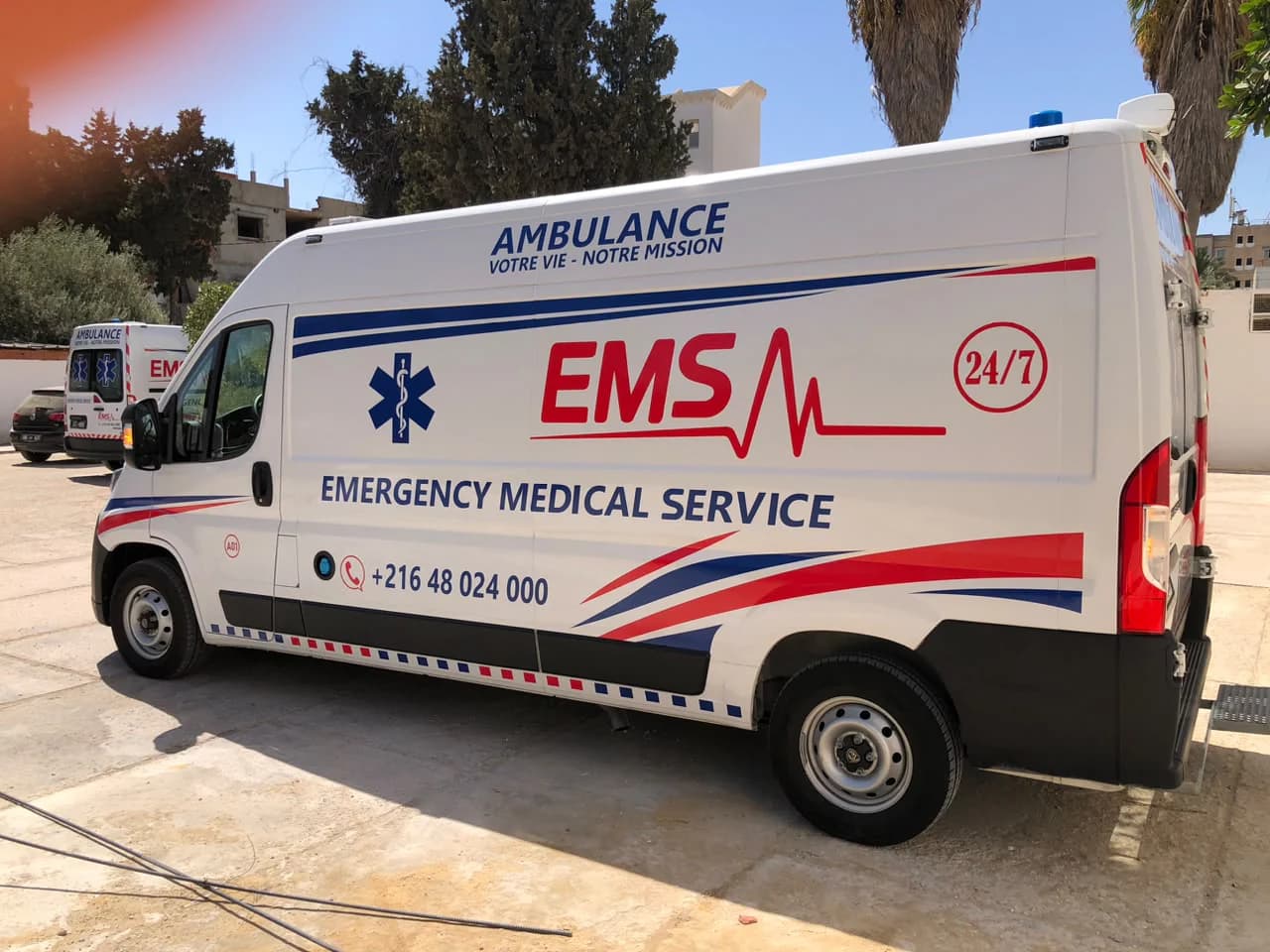
Ambulance in southern Tunisia: planning long-distance transport from Djerba, Medenine or Gabes
An ambulance journey from southern Tunisia to Sfax, the Sahel or Tunis takes several hours. The pickup point, any island crossing, oxygen needs and required arrival time must be planned. Based in Monastir, EMS arranges planned medical transport across Tunisia's 24 governorates, 24/7, with a quote before confirmation.
Medenine connects the routes to Gabes, Djerba, Zarzis, Tataouine and Ben Gardane. Estimates from Habib Bourguiba University Hospital in Medenine, excluding breaks and traffic:
Gabes: about 1 hour by road.
Sfax: about 2 h 30 to 3 hours by road.
Sousse or Monastir: about 4 hours by road.
Djerba-Zarzis Airport via El Kantara: about 1 h 30 to 1 h 45 by road.
Ben Gardane is about 1 hour by road from Medenine. The receiving medical service determines the destination. See our Medenine ambulance page.
Driving times from Djerba
The A1 motorway connects Medenine with Gabes, Sfax, Sousse and Tunis. From Houmt Souk via the El Kantara causeway, excluding waits and breaks:
Medenine: about 1 h 30 by road.
Gabes: about 2 h 30 by road.
Sfax: about 3 h 30 to 4 hours by road.
Sousse or Monastir: about 5 to 5 h 30 by road.
Tunis: about 7 to 7 h 30 by road.
Times are indicative and depend on the pickup location. See our Djerba ambulance page.
Djerba: choosing the crossing
Two routes connect the island to the mainland. The El Kantara causeway is approximately 7 km long and avoids boarding, but may involve a detour. The Ajim–Jorf ferry crosses about 2.5 km, with variable waits, especially in summer. For a patient lying down, receiving an infusion or medically fragile, the team assesses the route according to clinical condition, season and crossing conditions. No crossing time is guaranteed.
Specify the exact pickup location
Djerba includes Houmt Souk, Midoun and Ajim. For a traditional house or an inland residence, provide the locality, a known landmark and a shared location. Also describe the floor, steps and access. See Djerba, Medenine and Gabes.
Oxygen and equipped ambulance for a long journey
For journeys lasting several hours, the need for a monitor, defibrillator, oxygen or transport ventilator is assessed with the medical team. Provide the prescribed oxygen flow and expected journey length so sufficient supply can be planned for breaks and delays. Vehicle and clinical escort are adapted to the medical report. See our medicalised ambulance service and oxygen transport page.
Travelling to Djerba-Zarzis Airport
Djerba-Zarzis Airport is near Mellita, about 9 km from Houmt Souk, approximately 15 minutes by road outside traffic. From Midoun hotels, allow around 30 minutes by road. For departure, provide the airline, flight number and check-in deadline. Assistance inside the terminal or aircraft must be requested from the airline. See airport transfers.
Contact us the day before and request a quote
For planned transport, contacting EMS the previous day helps prepare the route and equipment. Provide both addresses, destination, required arrival time, patient position, oxygen needs and accompanying person. A coordinator calls back within 10 minutes.
EMS is a private medical transport service and does not replace SAMU. In a life-threatening emergency, call 190 first.
In a life-threatening emergency or an acute deterioration, contact the competent public emergency services immediately. A request sent by form or WhatsApp does not confirm a transport booking.
Frequently asked questions
How long is an ambulance journey from Djerba to Sfax?+
From Houmt Souk via El Kantara, about 3 h 30 to 4 hours by road, excluding waits and breaks.
How long from Medenine to Gabes?+
About 1 hour by road from Medenine University Hospital, depending on traffic.
Which crossing should be used for a patient lying down?+
It depends on the patient's condition and current conditions. El Kantara avoids boarding; the Ajim–Jorf ferry may involve waiting.
What information is needed for a patient on oxygen?+
Prescribed flow, required devices and expected journey duration so an appropriate supply can be calculated.
Why contact EMS the previous day?+
To plan the route, any crossing, equipment and crew, especially during summer.