An elderly person's return home should be prepared as a transition of care. The aim is not only to get home, but to have a safe environment, the prescribed treatments and the necessary follow-on care in place straight away.
Mobility may differ from what it was before the hospital stay. Ask whether the person can stand, sit, walk a few steps, or must be carried in a wheelchair or on a stretcher. Report any pain on movement, oxygen therapy or medical restriction.
Check access to the home
Give the floor, whether there is a lift and its size, the number of steps and the width of the passages. Clear the way to the bed or chair. Someone with the keys must be there before the ambulance arrives.
Prepare equipment and medication
The bed, chair, incontinence products, oxygen and prescribed aids should be ready. Check prescriptions, doses, the first dose at home and the medication available. If in doubt, contact the discharging ward or the professional in charge of follow-up.
Organise the follow-on care
Confirm visits from the nurse, doctor, physiotherapist or home carer. Note the follow-up appointments and the numbers to call in case of a problem. The family should know who will stay with the person during the first hours.
Prepare the transport with EMS
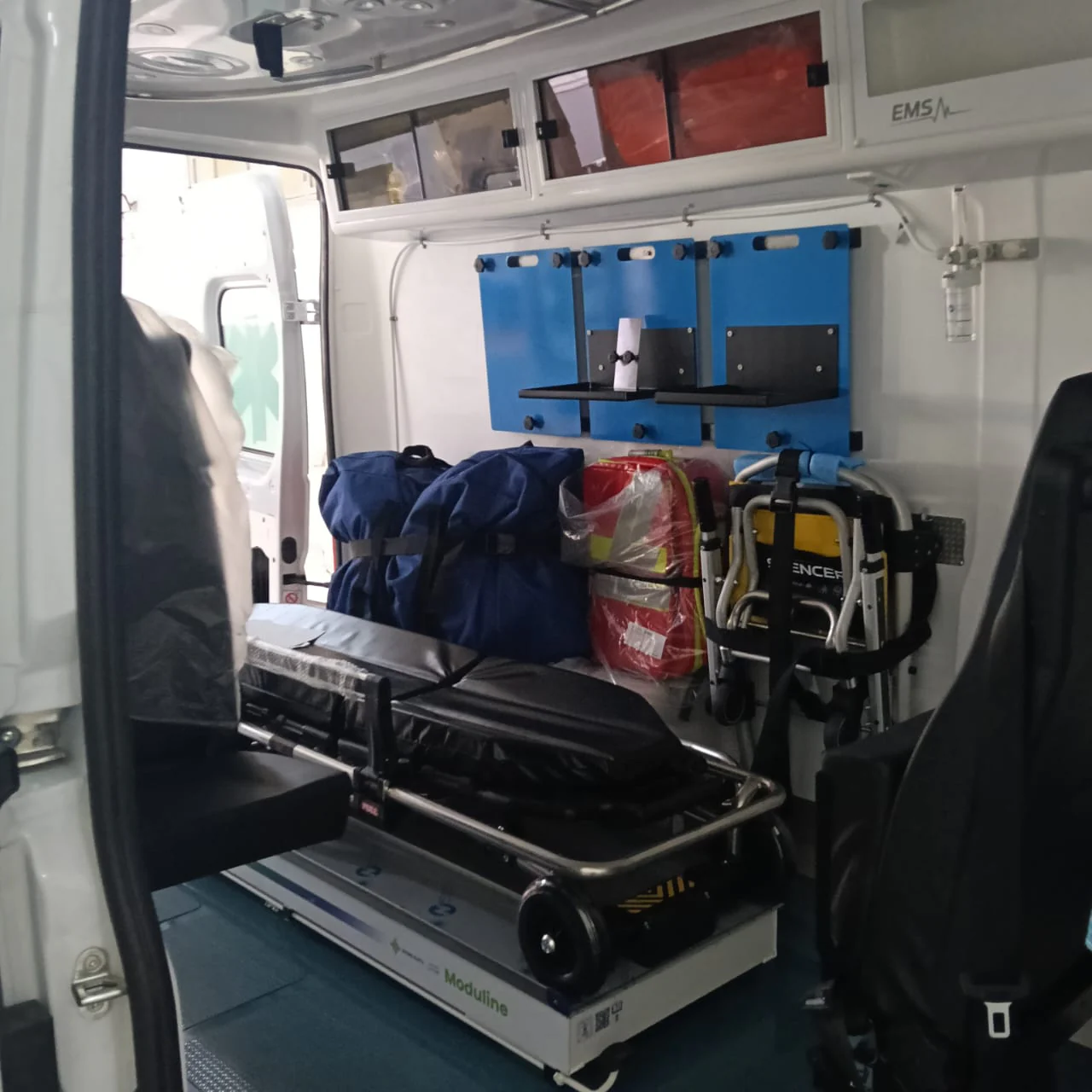
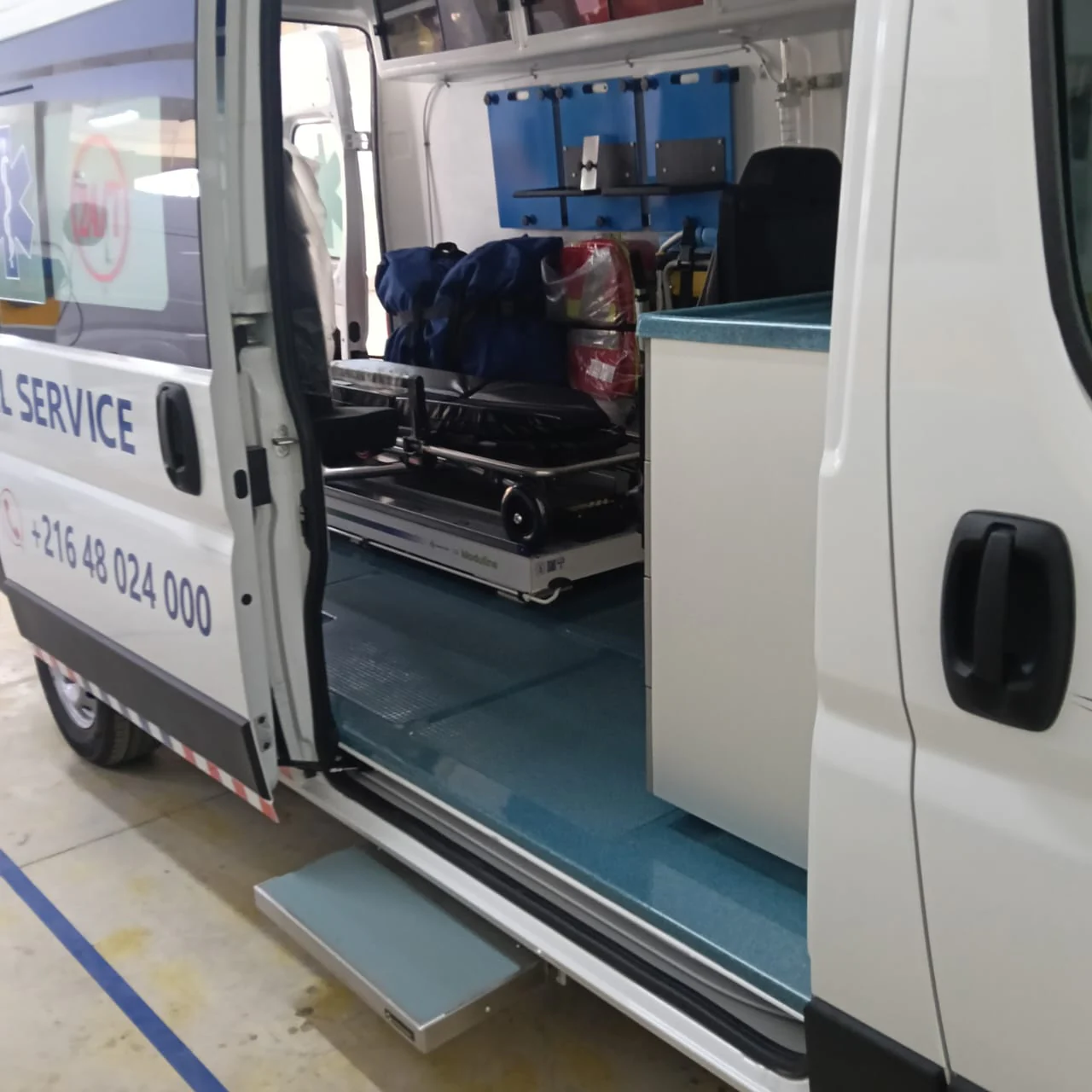
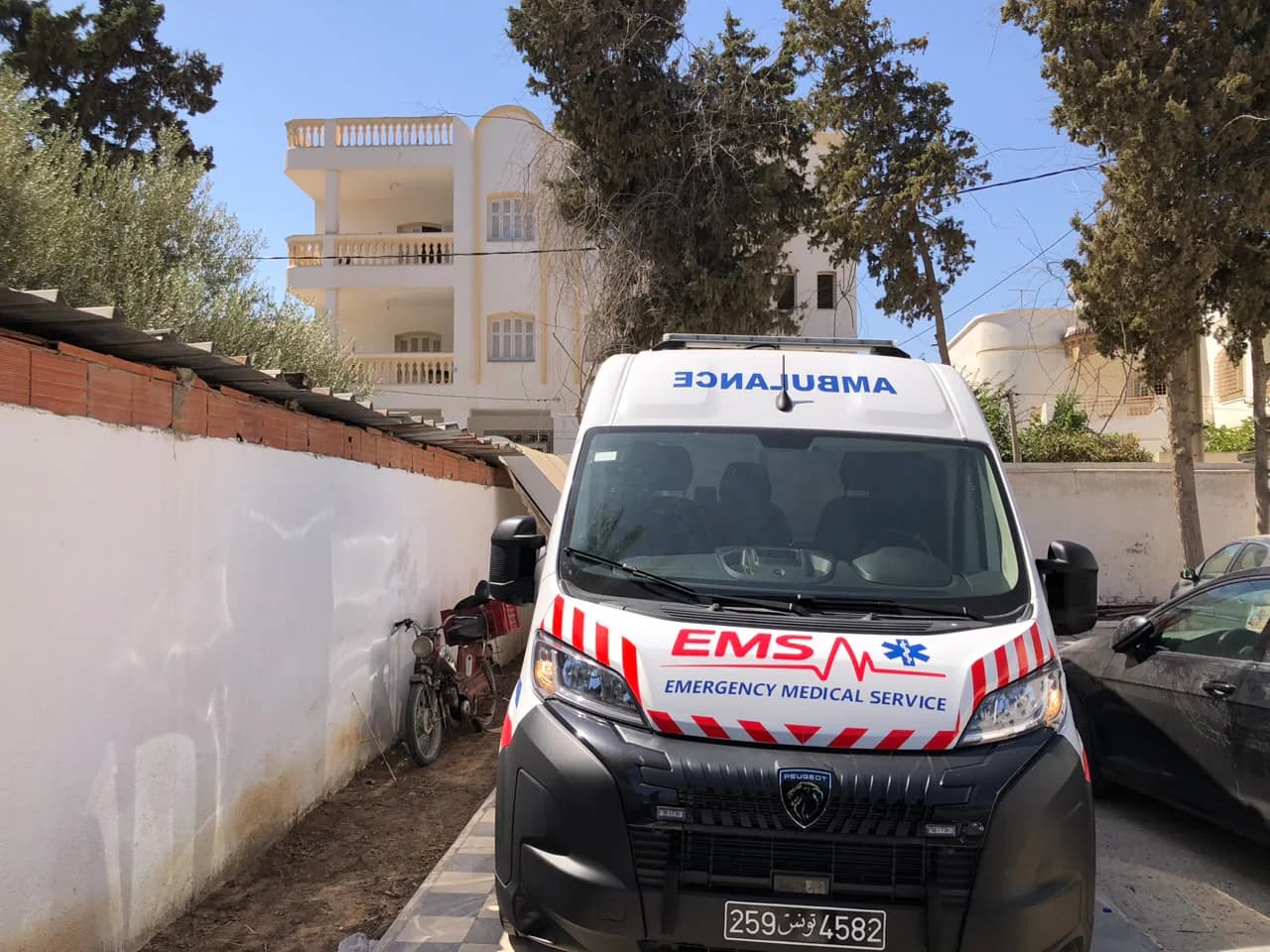
Give the discharging ward, the exact address, the access constraints, mobility and the contact present at the home. On the day, tell EMS of any clinical change or delay to the discharge.
In a life-threatening emergency or an acute deterioration, contact the competent public emergency services immediately. A request sent by form or WhatsApp does not confirm a transport booking.